
If you are planning a lift, whether it is installing glass, moving building materials, or working on a tight residential site, one of the first questions is usually:
Do I need permission to use a crane?
The short answer is, sometimes yes, but not always. It depends on where the crane is being used, how the lift is carried out, and whether public space or other properties are affected.
Below we have broken it down in a simple way so you know what to expect before arranging a crane.
When permission is needed for crane work
You will usually need permission if your crane operation involves any of the following:
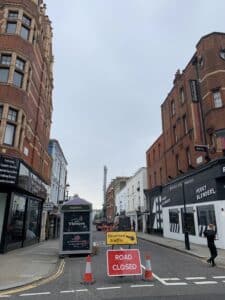
- Setting up on a public road or highway
- Closing or partially blocking a road
- Using parking bays or restricting traffic flow
- Lifting over a public pavement or highway
- Accessing public land or council property
In these cases, approval is normally required from the local authority. This can include permits, parking suspensions, and traffic management plans.
It is always worth checking early, as some councils need at least four weeks’ notice, and larger lifts can take longer to approve.
Using a crane on private land
If the crane is fully on private property and does not affect public access, permission is often not required. However, that does not mean you can skip planning.
You still need to consider:
- Access in and out of the site
- Ground conditions and whether they can support the crane
- Nearby buildings, trees or overhead obstructions
- Whether the lift will pass over neighbouring land or property
Even when formal permission is not needed, safety planning and proper lift preparation are still essential.
Lifting over houses or neighbouring property
This is very common on residential and small construction projects, especially for:
- Glass installations
- Roof work
- Steel beams and structural materials
- Garden or rear property access
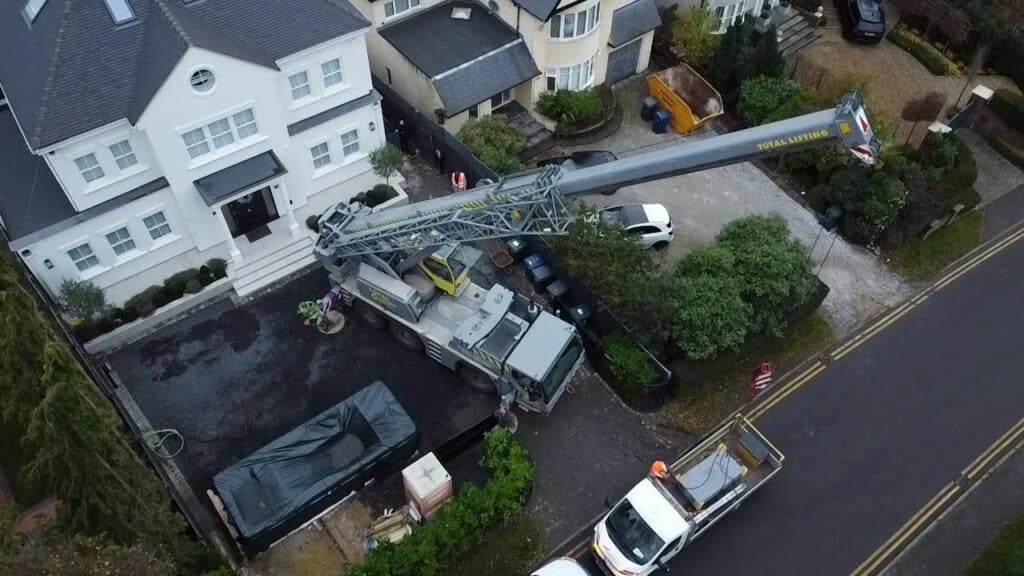
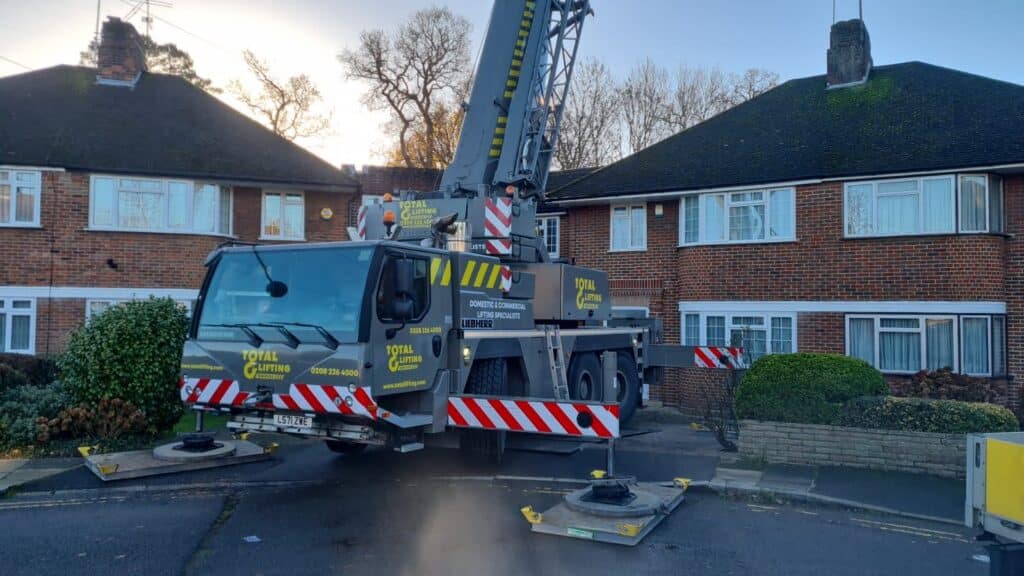
In most cases, you do not need formal permission just to lift over a property, but you do need to manage it properly. This usually includes:
- Planning the lift route carefully
- Carrying out a risk assessment
- Informing neighbours if the lift affects them
- Ensuring full control of the load at all times
This is where working with an experienced crane team really helps, as they will handle the planning and safety side for you.
What is a contract lift and do you need one?
If you are unsure about permissions or the lifting process, a contract lift is often the simplest option. With a contract lift, the crane company takes responsibility for:
- Planning the lift
- Carrying out risk assessments
- Providing lift method statements
- Managing safety and compliance
- Supplying the correct crane and crew
This is particularly useful for:
- Domestic or restricted access sites
- Complex lifts
- Projects where you want everything managed professionally
Learn more about our contract lifting services here
It also reduces your responsibility and ensures the lift is carried out safely and legally.
Common crane restrictions to be aware of
Even when permission is not required, there are still practical restrictions that can affect your lift:
- Weight limits on roads, driveways or ground surfaces
- Overhead obstacles such as power lines or trees
- Tight access routes or narrow entry points
- Local restrictions on working hours in residential areas
These factors all influence the type of crane that can be used and how the lift is carried out.
Find out more about crane operation restrictions
Choosing the right crane for restricted access jobs
For smaller or tighter sites, compact cranes are often the best option. All Böcker cranes, in particular the AK52, are commonly used for:
- Glass installation
- Roofing projects
- Lifting over houses
- Sites with limited access
View our Böcker AK52 crane specification
Using the right equipment can reduce disruption, speed up the job, and sometimes avoid the need for more complex permissions.
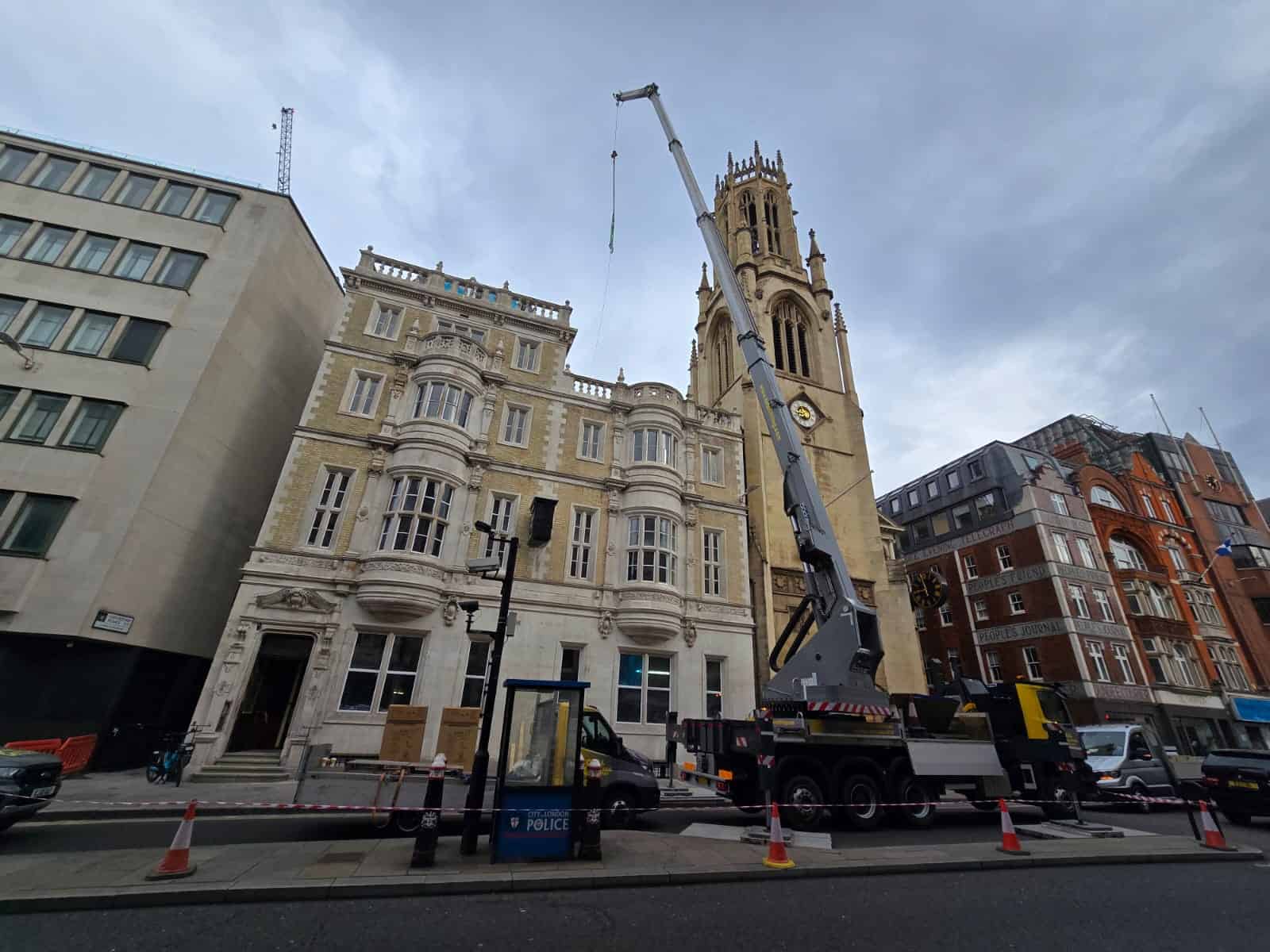
Example: Commercial glass lift on Fleet Street, London using a Böcker AK52
To show how these types of lifts work in practice, here is a recent example of a commercial glazing project completed over the Easter weekend in central London. The project involved multiple glass lifts for a glazing contractor on a building located on Fleet Street. Due to the nature of the site and surrounding area, careful planning and coordination were required throughout.
A Böcker AK52 crane was used to carry out the lifts, handling a range of glass units of different sizes, with the heaviest weighing 472kg.
The challenge
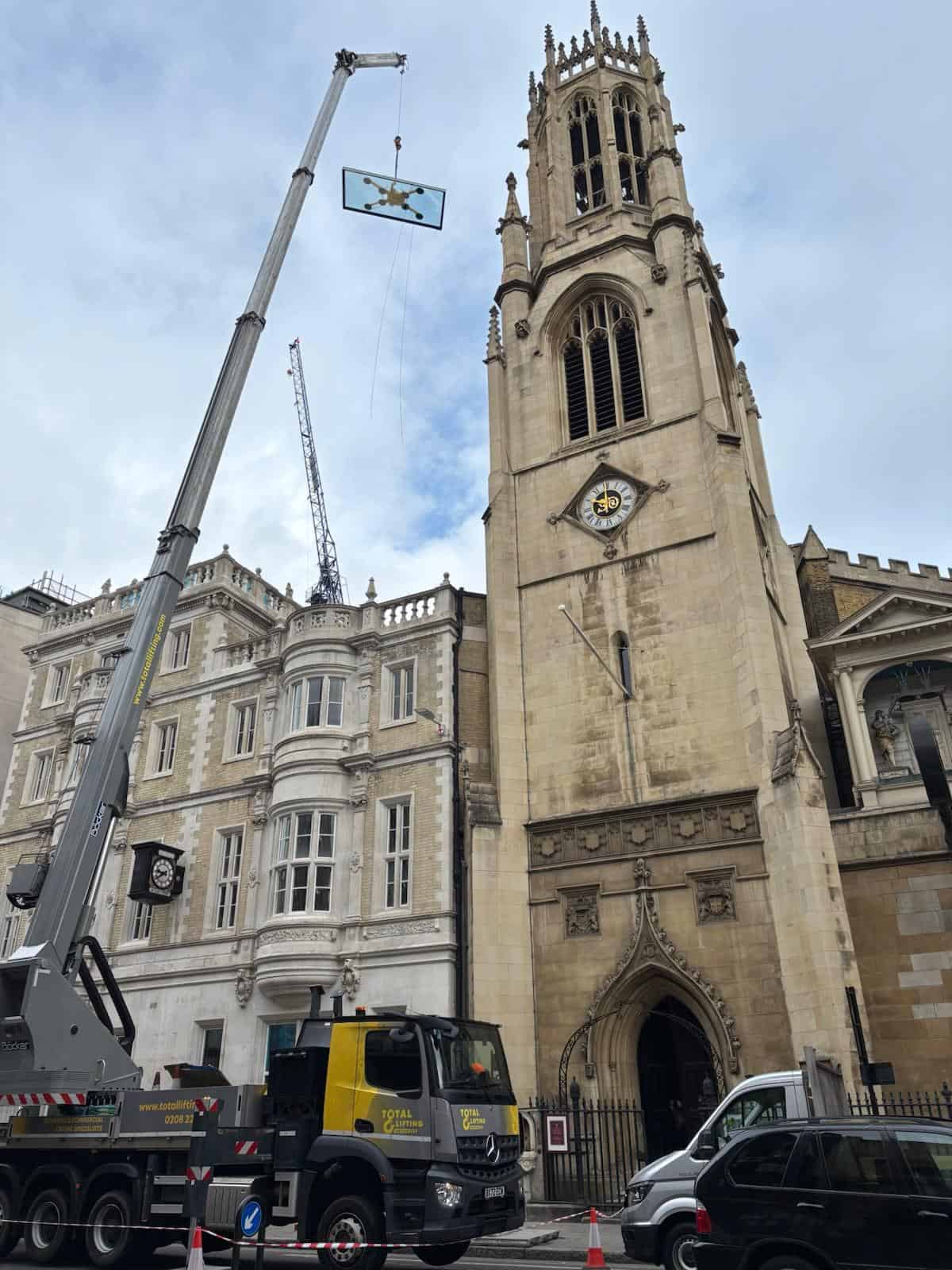
Working in central London always brings added complexity, and this project was no different.
The lift required:
- A full road closure on Fleet Street
- Diversion of buses and local traffic
- Temporary cycle and pedestrian diversions
- Coordination with local authority requirements
In addition, there were underground drainage services in the area, which can often restrict where heavy plant can operate safely.
However, because the Böcker AK52 is lightweight and highly manoeuvrable compared to traditional cranes, it was able to operate effectively without placing excessive load on sensitive ground areas.
The solution
The Böcker AK52 was selected specifically for its compact design, precision handling, and ability to work in restricted urban environments. Its setup allowed the team to:
- Position safely within a confined city centre site
- Carry out multiple glass lifts efficiently
- Work around local infrastructure and service considerations
- Maintain full control and precision during lifting operations
The result
The project was completed successfully over the planned Easter weekend window, with all glass units installed safely and on schedule.
Despite the challenges of working in a busy London location, the combination of careful planning and the right lifting equipment ensured:
- No disruption beyond the planned traffic management
- Safe handling of all materials, including the heaviest 472kg lift
- Completion on time and within the agreed programme
- Full compliance with site and safety requirements
Why this matters
This project is a good example of how compact specialist cranes like the Böcker AK52 are often the ideal solution for urban glazing work.
In environments where access is restricted and ground conditions or infrastructure must be considered, choosing the right crane can make the difference between a complex operation and a smooth, controlled lift.
How to make the process easier
If you are planning a lift, the best approach is to get advice early. A few simple steps can save time and avoid issues later:
- Speak to a crane company at the planning stage
- Share as much detail about the site as possible
- Allow time for permits if they are needed
- Consider a contract lift for more complex jobs
Need help planning a crane lift?
Crane permissions and restrictions can feel complicated, but they do not have to be. If you are not sure what is required for your project, we can help you work it out and recommend the right solution. From permits and planning through to the lift itself, everything can be handled for you.
Get in touch with our team to discuss your crane hire requirements